
Data & Decision Insights #3
One Year of Starmer: ARR, Socialism vs Barbarism, and Island of Strangers.

Good Afternoon,
Welcome to the third edition of the Trafalgar Analytics Data & Decision Insights. This Insight (July 2025) focuses on the twelve months of Keir Starmer in power. We assess the seven defining issues of this month, and of the past year, and why it matters for the next four years.
Agenda for this Insight:
The Covert Afghan Resettlement Scandal - a Uniparty collusion on migration.
Four Labour MPs suspended, and threats of decimation - Starmer’s war against his electoral arithmetic.
Socialism vs Barbarism? I agree! (An EXCLUSIVE response to Corbyn-Sultana, by Bukes, an independent political analyst.)
What the Manchester Airport attack tells us about British policing?
Rape Gangs Scandal - what unites Nick Lowles, Baroness Casey, and Fraser Nelson?
Island of Strangers Speech - client journalism laid bare.
Benefits, Brexit, and Cheap Labour - a warning shot to the next Government combatting “Nothing ever happens” in practice.
PLUS: A summary of our most recent work and output (free); *EXCLUSIVE* the Conservative Party has opened applications for their candidates list, see what criteria and questions they have set out (paid); and upcoming Trafalgar research to look out for (paid).
1) The Covert Afghan Resettlement Scandal - a Uniparty collusion on migration.
Earlier this week (15-July-2025), the super-injunction covering the Covert Afghan Resettlement Scandal, following the fall of Kabul (2021), was finally lifted.
After 3 years, the British public finally learnt that 20,000 Afghans had been secretly relocated to Britain, with the total spend coming towards £7 billion. This included individuals who had been rejected from the official Afghan Resettlement and Assistance ARAP scheme, including those declined due to sexual and violent offences.
Now, you might ask, why? Well apparently, a list of ARAP applicants, both successful and unsuccessful, was accidentally sent to an informant, who then threatened to forward it to the new Taliban Government.
In its infinite wisdom, under a Conservative administration, the entire British state —the MOD (Ben Wallace), Home Office, Exchequer, and almost every other Government Department and QUANGO— decided that up to 100,000 Afghans would be 'at risk' from the Taliban. Not only did the Government think that it had a moral obligation to take them all (regardless of vetting), it would impose a super-injunction through the courts. The decision was then hidden from the public, the press, official spending figures, and the official immigration figures. Most notably, this injunction was renewed a day before Rishi Sunak called the 2024 General Election, and subsequently renewed every three months thereafter by the Labour Government.
There are three critical issues on the Covert Afghan Resettlement Scandal that needs directly addressing: (1) our Moral Obligations, if any; (2) the Americans and the Taliban; and (3) the British Right making the scandal about Antisemitism.
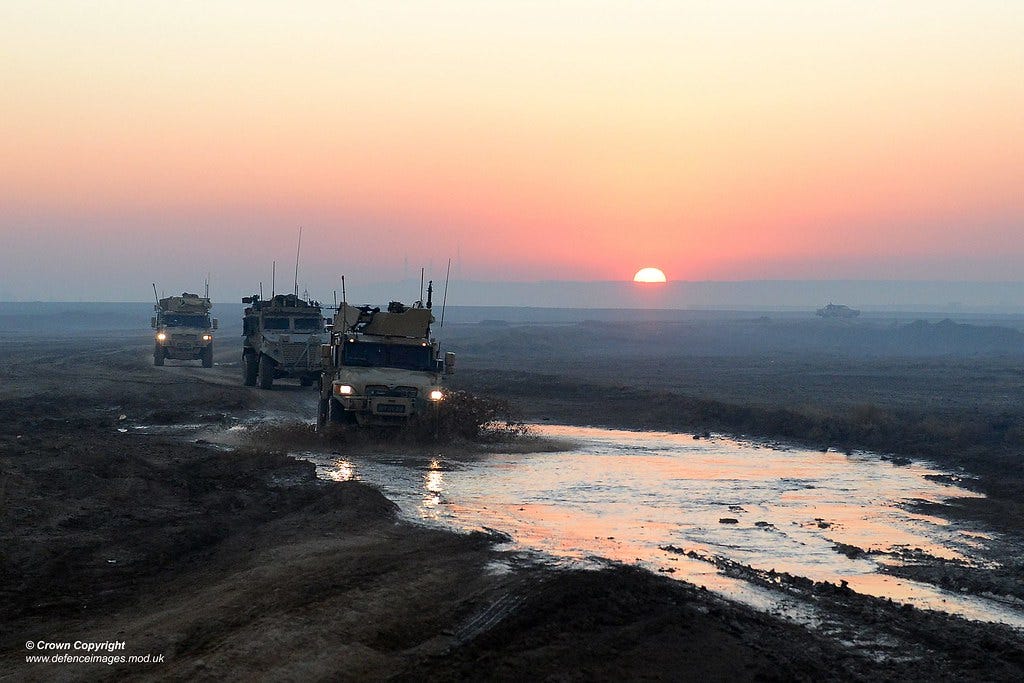
(1) Our Moral Obligations, if any.
The usual intellectual scaffolding for why the Afghans needed to come over revolves around Britain’s ‘moral obligations’ to its translators and those who worked for the British Army—no matter how indirectly or handsomely they had already been paid.
In reality, the vast majority of the tens of thousands who came through the ARR did not work for the British Army. At most, only 20% of the ARR scheme had any direct contact with the British Army. Within this subset, we now know many were rejected from the official ARAP scheme, whether due to sex crimes or national security reasons (double/triple agents, etc). There has also been detailed reporting of ARAP that some Afghans even brought over 22 'family members', who did not even have blood relations, and yet our courts ruled in favour of this.
This is why the moral obligation argument is so tenuous — not least because we have already paid these foreign contractors, but because it has opened the door to endless abuse and expense.
(2) The Americans and the Taliban
On the issue of the Taliban, the US-Taliban Deal (full text) that paved the way to the lifting of sanctions and the return of the Taliban was negotiated by Zalmay Khalilzad - a Bush, Trump, and Biden appointee. The deal was then endorsed by India, Pakistan, Russia, China, and then the rest of the UN Security Council. It is rare for an American foreign policy decision to receive this breadth of support. In essence, the West had given its consent to the Taliban's return to power, making the argument for resettlement based on fear of the Taliban less convincing.
At Fall of Kabul, Taliban forces even guarded and stayed outside the border of the Kabul International Airport. They let American and Coalition soldiers use the airport - to take out their people, equipment, cats and dogs, for an extra sixteen days.
The truth is, the Taliban were deemed then, and are deemed today, as a trustworthy-enough partner for the United States to “seek positive relations”, “seek economic cooperation”, and cooperate with - against their common enemy ISIS-K. Frankly, it was no longer cost-effective for America and its allies, to continue treating the Taliban of 2021 as the same Taliban of 2001.
Since then, Germany has deemed Afghanistan safe enough to return Afghan nationals and criminals. And cherry on top, One Nation Tory MP, Tobias Ellwood, the then-Chair of the Defense Select Committee, even called for relations with the Taliban to be established. This caused such a scene, he was (wrongly) forced to resign. Whilst Ellwood's wider politics has come under a lot of fire from the Right, his view on Taliban relations was actually more grounded in reality than people would like to admit.
(3) The British Right making it about Antisemitism
Finally, anyone remotely associated with the Right online will have likely noticed the unsightly spat between Suella Braverman (former Home Secretary), Rob Jenrick (former Immigration Minister), and Zia Yusuf (former Reform Party Chairman) - arguing over who exactly was responsible for this scandal.
As is common across all social media, these spats always escalate. Everyone is now up in arms over allegations of whether an antisemitic tweet was liked by Yusuf or his intern.
[Addressed to Zia Yusuf]
“You’ve spent the last 48 hours calling me a ‘traitor’ for not drawing attention to a leaked spreadsheet with our special forces and MI6 officers’ names on.
But we’re meant to believe this tweet attacking me as a traitor for having a Jewish wife & family was liked ‘accidentally’ by ‘one of the team.’ You must think we’re all thick.”
Robert Jenrick (link), 18th July 2025.
With due respect to everyone involved, the Covert Afghan Resettlement Scandal is the biggest political scandal to hit Britain in the 21st century.
The Government and courts concealed £7 billion from the budget; tens of thousands of Afghans were secretly scrubbed from several sets of immigration figures; multiple departments kept the figures secret; Ministers lied to Parliament multiple times; the whole thing was concealed by the Tories throughout the 2024 general election; and Labour kept the super-injunction for another year.
This Afghan story is bigger than trying to prove the unfalsifiable accusation of whether Zia or his intern had liked a bad tweet about Jenrick's wife. While the liking tweet in question is regrettable, it should not overshadow the gravity of the scandal itself.
If the Right is unable to take tangible steps to ensure that this kind of immigration scandal will never happen again, but instead chooses to dive headfirst into this side story (and refuse Zia’s apology), then no lessons will ever be learnt.
Concluding Remarks
In our last paper on NHS GP Registrations and Illegal Migration, we found that since 2019, the Home Office -under Sajid Javid- ended any new residual method studies to estimate the scale of the illegal migration to Britain. Any change to this decision has been subject to the Ethics Advisory Committee first deciding that a new study would be in the “public good”. Unsurprisingly, the Committee has not changed its mind since.
Following that, in 2020, the Home Office -under Priti Patel- discontinued exit check statistics, blaming the Covid Pandemic. This has not been resumed by subsequent Tory or Labour Home Secretaries.
Taken as a whole, Britain has had successive Governments in denial or outright lie to the public over migration - be it legal or illegal in nature. Without totally reversing course on the migration question, Britain’s social, economic, and political conditions will simply go from bad to worse.
2) Four Labour MPs suspended and threats of decimation - Starmer’s war against his electoral arithmetic.
This week (16-July-2025), the Labour Party suspended four of their MPs for “breaches of party discipline” and being “persistent rebels”, namely for their role in organising a 120+ Labour backbench rebellion over welfare reform and disability payments. This response was a long time coming, because no normal Government can continue suffering major parliamentary defeats without dealing with the dissenters, especially when it came into office with a 411 seat landslide.
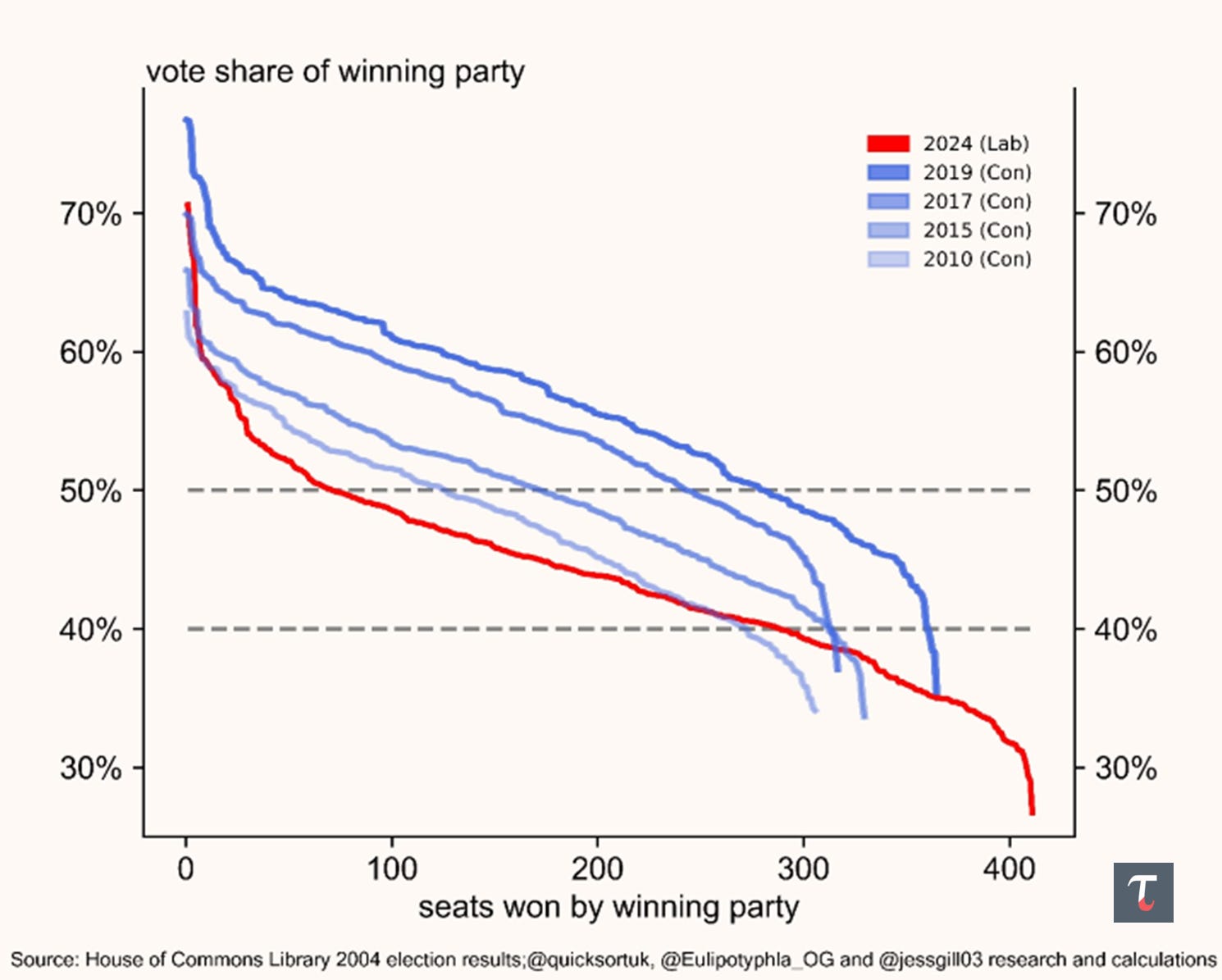
Readers may be aware that in Trafalgar’s most recent Electoral Data paper, we found that 123 Labour MPs (30% of the Parliamentary Party) had vote shares under 40%, with some just in the high 20s. Party management for Labour over the next four years will be worse than at any point during Rishi Sunak’s reign. No new disciplinary measure or fresh narrative will reassure these MPs that they will hold their seats. This fear will be the sole driver to more dissent, rebellions, and government U-turns.
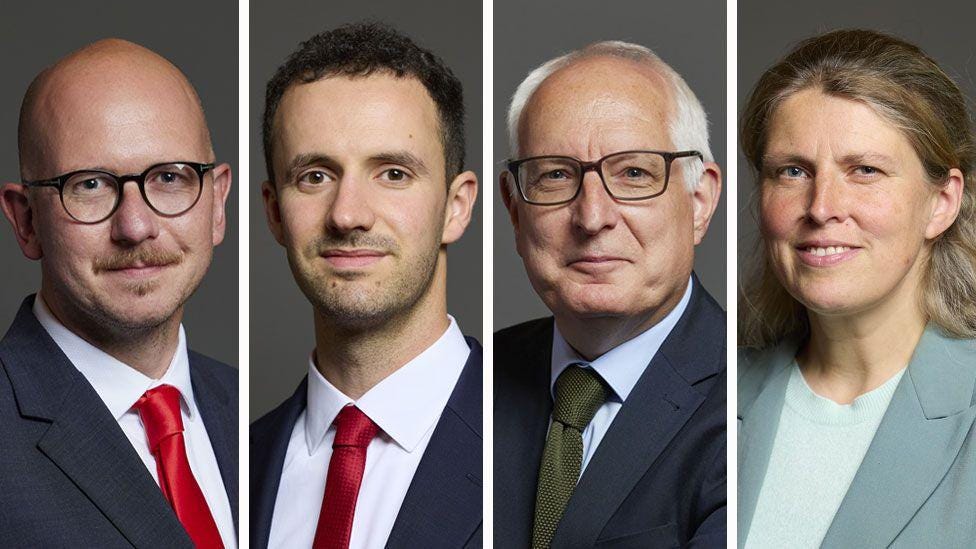
As to the MPs chosen, Leishman, Hinchliff, and Duncan-Jordan all have vote shares between 35-45%; in fact, the latter commands a majority of a whole 18-votes! These three are unlikely to radically change their behaviour going forwards. It is possible they may abstain instead, if they want the Labour whip back, but no punishment regime will ever turn these into lobby fodder.
In the case of Rachel Maskell, she is likely known to readers of Trafalgar by now, as the former Labour frontbencher, who announced: “We will keep going [with immigration] until we hit our saturation point, because what does it matter if we have to wait another week for a hospital visit?”
We covered her cavalier attitude in our recent paper on NHS GP Registrations (07-July-2025), which was further highlighted by the Tory MP Neil O’Brien (14-July-2025). Although many Labour frontbenchers share much the same sentiment, being this explicit is still too mask-off and embarrassing for Starmer. We anticipate that Maskell will be unlikely to receive her whip back, given her disobedience internally and her indiscrete opinions externally.
The cherry on top of this story, is that one Labour loyalist even suggested that for the next mass rebellion, “ten [rebel] MPs” should be suspended at random, and selected through a “tombola”! Disgruntled MPs have complained that the suspensions have already created a “climate of fear”. Well, yes, there are party whips for a reason.
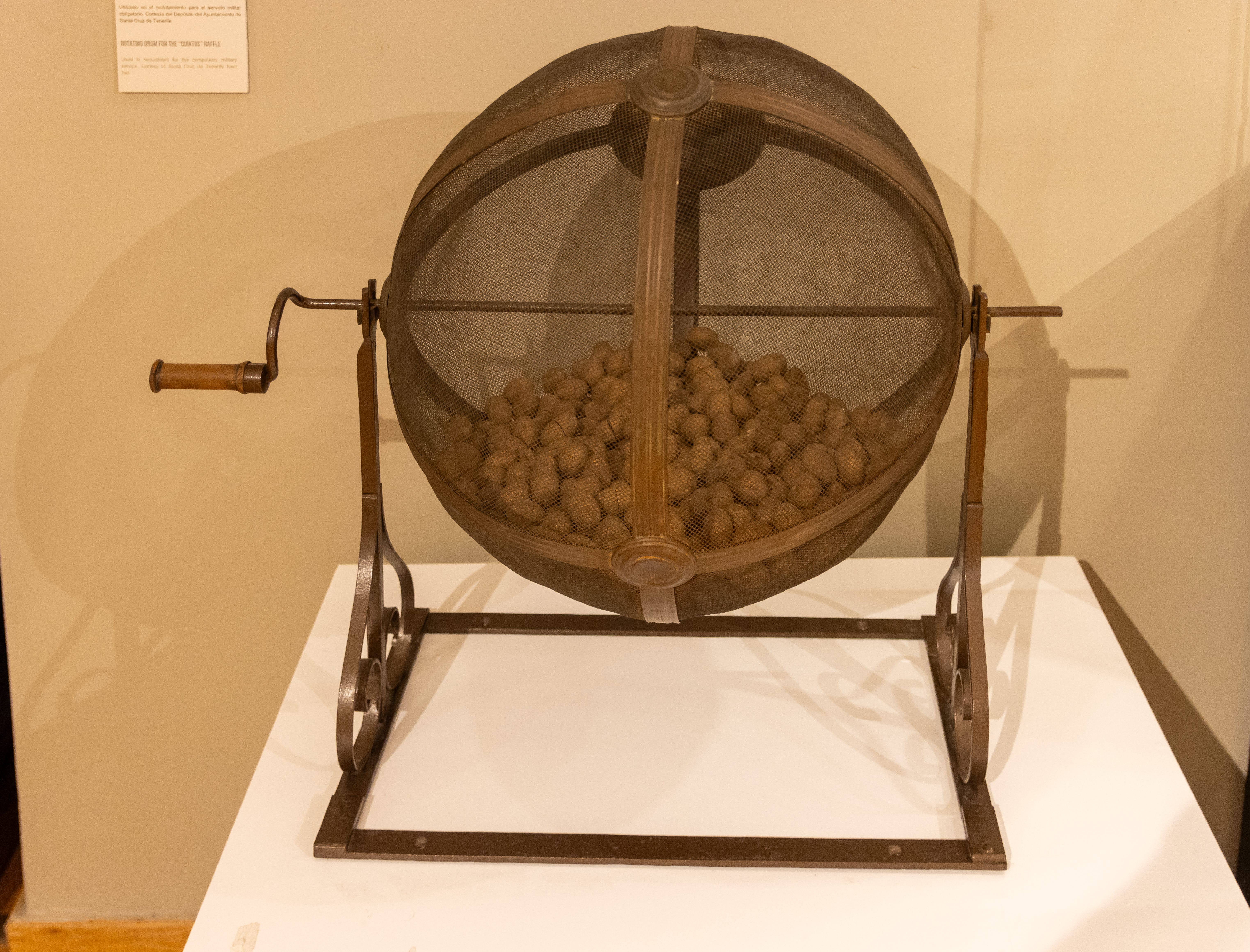
But, whether it will succeed at improving party management is anyone’s guess. To be generating these Roman Republic decimation-esque ideas is reminiscent of Dominic Cummings’ Brexit tactics in 2019. This alone tells you the depth of Labour’s crisis. Starmer will be unlikely to overcome this electoral arithmetic. The suspensions are an attempt by Starmer to assert control over his party, but given the electoral vulnerabilities of many Labour MPs, it's unlikely to quell dissent.
P.S. 48 hours after this suspension was announced, the Labour Government has agreed to Hinchliff’s amendment on the environment, for its Planning and Infrastructure Bill. Another U-turn.
The following is an EXCLUSIVE piece, following Zarah Sultana and former Labour Leader, Jeremy Corbyn’s announcement to set up a new radical alternative Left wing party - on the one year anniversary of Starmer’s victory (04-July-2025).
This response to Corbyn-Sultana is authored by a first-time anonymous guest contributor - in defence of socialised education, medicine, housing, and the traditional welfare state.
3) Socialism or Barbarism? I agree.
We have the terms of engagement proposed before us for the next four years of politics in Britain.
Zarah Sultana, MP for Coventry South, declared on the 9th of July via Twitter “In 2029, the choice will be stark: Socialism or barbarism” - attached with a picture of her scornful, self-serious visage - glaring daggers into the back of Nigel Farage’s head.
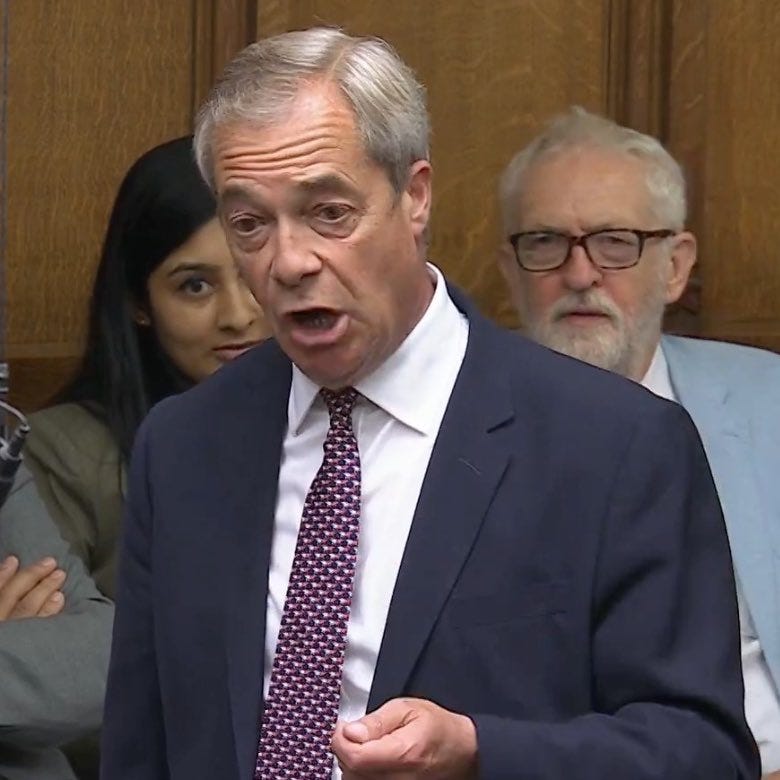
Her carefully-crafted persona of a principled representative of ‘The People’ could hardly survive the same tired daemonisation of Farage, placing herself much closer to the liberals she pretends to be so far removed from.
Also worth mentioning is the appearance of a baffled Jeremy Corbyn, seemingly clueless as to the new forces shaping Britain – “how did Farage get here? Why is the working class voting for him?”, he wonders in perpetuity.
The prevailing, definitive split of left and right for -at least- a decade now has been between those wishing to retain the nation state and those causing its dissolution. Who you align with, who you consider your friend or your enemy, is almost solely (unfortunately) driven by your stance on immigration.
So yes, the choice is between socialism and barbarism – and Reform UK is the best vehicle for defending socialism.
The socialist project begun by the English Methodists and Trade Unionists of the 19th century, must be protected from the voracious barbarism of Yookay Britain and the whims of our open-borders establishment, who remain shielded from the impact of their decisions to this day.
There is no hope for the future of the welfare state without an end to mass immigration.
—
By -B-, an Independent Political Analyst, and first-time Guest Contributor to the Trafalgar Analytics Data and Decision Insights.
4) What does the Manchester Airport attack tell us about British policing?
On the 23rd July 2024, we saw news of apparent police brutality at Manchester Airport. CCTV footage was leaked of a policeman kicking a man in the face, with very little context before or after.
“I understand the public concern”, said Keir Starmer. As did Yvette Cooper.
We later learnt from the BBC that the man in question had had an altercation with another customer at Starbucks, and the police had to separate the men, as it had escalated. But, we then heard nothing more. (To this day, it is unclear how the footage was leaked).
Soon after, the lawyer-turned-politician Akhmed Yakoob (currently facing charges of money laundering) offered to take the case against the police. It is a case that would certainly be in his political interests to win.

One year on, and the full CCTV clip was finally released. It transpires that moments before police had put him to the ground, Mohammed Fahir Amaaz (20) had punched a police woman in the face and broke her nose. Body cam footage shows PC Lydia Ward with blood running down her face.
Lord Hewart established in 1924 that “justice must not just be done, but be seen to be done”; a century later, it remains to hold true.
The moral of police officers, the police as an institution, and the legitimacy of the state were deeply damaged by narratives that the Police were racist and anti-Muslim; this went unchallenged for a whole year. It is deeply corrosive to public trust that the authorities sat on this footage of a police woman being assaulted, and did not release it sooner to correct the record. The delay in releasing the full footage allowed false narratives about institutional racism to take hold, damaging public trust in the police.
Given the viral nature of this case, it must serve as an instructive lesson to our criminal justice system that the public deserves transparency.
Back to Keir Starmer, one could ask, “do you understand the public concern now?”
This whole affair also turns our attention onto the role of women Police Officers. What would have been the consequence if PC Ward had been a man, and having been assaulted, his colleague had apprehended the suspect and in the process put the boot to the face of the assaulter? This is a hypothetical here, but one we cannot intellectually avoid.
Sir Charles Haughton Rafter, perhaps the most impressive Chief Constable in the history of Birmingham City Police (who famously dealt with the Peaky Blinders), was one of the first to introduce women police officers into the force. This women’s police department began with remit over female inmates, children in custody, and covering cases involving indecent exposure, sexual assault, attempted suicides, obscene language, and shoplifting. Rafter also thought the presence of women officers protected male officers from “readily and glibly made” accusations.
Many of those arguments are as valid today, as it was then.
However, when we see small policewomen being dispatched by male suspects, there are serious questions over the Police’s strength and physical requirements today. The grip strength and functional tasks common across police recruitment pre-2000 no longer apply. If frontline policing is going to be effective in the face of rising violent crime, we need clear answers to whether today’s standards will meet today’s challenges, let alone tomorrow’s.
5) Rape Gangs Scandal - what unites Nick Lowles, Baroness Casey, and Fraser Nelson?
The Rape Gangs Scandal (which plagued Britain since at least the 1980s) is starting to get the attention and action that it deserves. After months of dragging his feet, Keir Starmer has finally agreed to a national public inquiry. Baroness Casey was asked to publish a preliminary audit of the available information on the scandal.
Trafalgar’s assessment of the Casey Audit is that it made some concessions towards establishing the truth but remains quite flawed. However, Casey’s attitude and conclusions are not unique; a certain Nick Lowles was expressing Casey’s position thirteen years prior (in 2012). In many ways, nothing has changed.
For those who are unaware, until 7th July 2025, Nick Lowles was the CEO of Hope Not Hate, a Left-wing campaign organisation known for doxing and cancelling Right-of-centre figures. For many years, HNH has been closely associated with many Labour MPs. Although they are waning and face mounting public pressure for their activities (especially from The Restorationist), it goes without saying that their views and effective campaigning have had a tangible effect on the shape of modern Britain, despite fourteen years of Conservative Government.
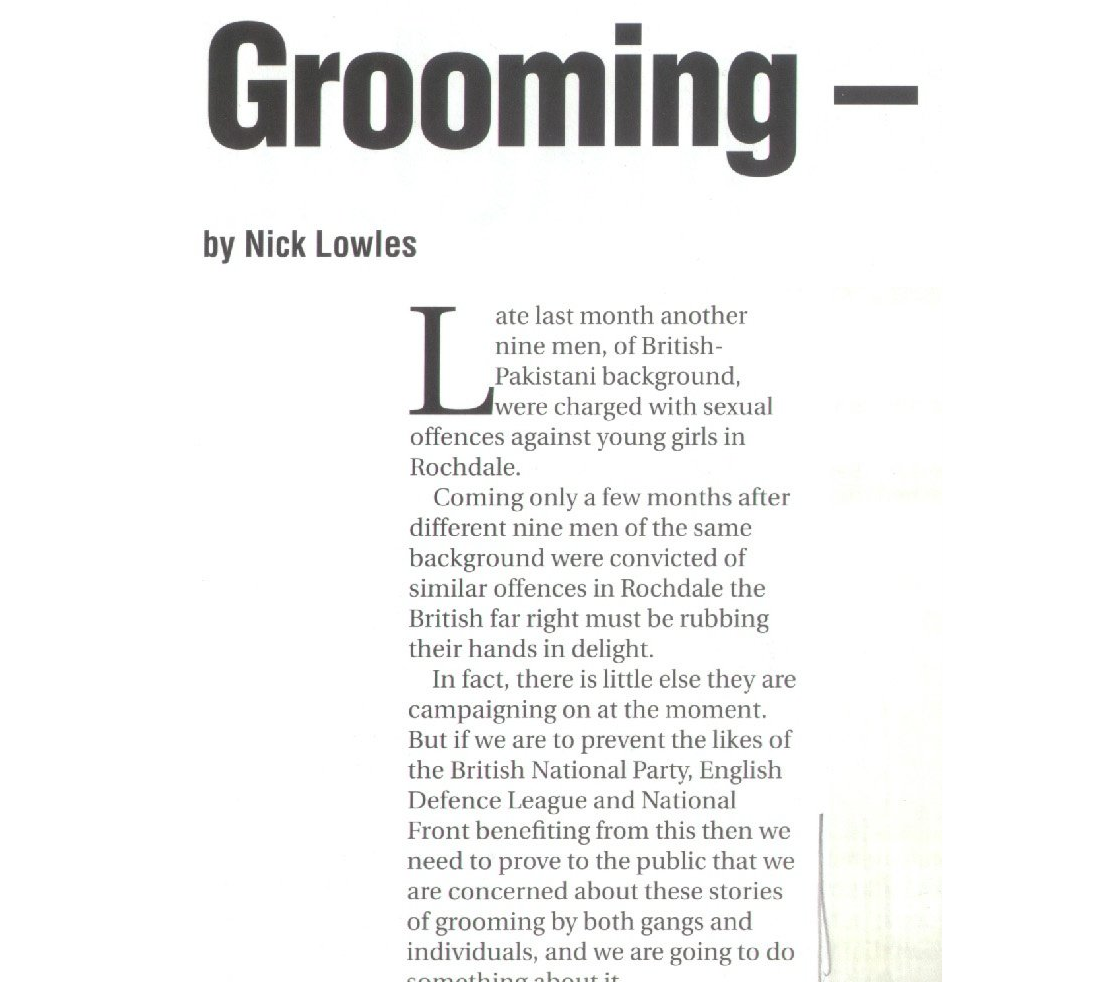
Second paragraph into a two page spread (circa 2012) on the rape gangs, Lowles’ basic premise is that “the British far right must be rubbing their hands in delight”. He boldly states “if we are to prevent the likes of BNP, EDL and National Front benefitting from this, then we need to prove to the public that we are concerned.. and we are going to do something about it”. All in all, it has to be one of the stranger reactions to learning about organised group child rape happening in the country.
But, on a fundamental level, is this position particularly different from Baroness Casey? After publishing a report on the over-representation of Asian-Muslim perpetrators in the rape gangs scandal (using flawed, under-reported per capita figures, but that’s for another day), Casey told Parliament she was “disappointed” by the “politicisation” of her report.
With due respect, what does Casey want done instead?
Successive politicians failed these victims for forty+ years. If politicians today do not commit to making amends and to holding the complicit accountable, then how else does one effect change in a democracy? In effect, Baroness Casey has managed to turn what Nick Lowles said in two pages (in 2012) into 197 pages and one BBC Newsnight interview in 2025.
But, essentially, this is no surprise. In 2017, Fraser Nelson (former Spectator Editor) more or less intimated that so long you choose the “right language” to “hear [people’s] concerns about immigration”, then one does not even need to “come up with policies” to deal with migration! The Swedish interviewer, in shock, asked, “are you saying it is only psychology?”
Across the mainstream (left, centre, and right), too many of the political class are obsessed with managing perceptions and optics instead of taking decisive action. Lowles, Casey, and Nelson all, in their own ways, prioritised managing public perception over taking concrete action. The follow-up over the next few years to Casey’s findings on the Rape Gangs Scandal under Labour is set to be a repeat of this cycle.
“We have heard your concerns. On a completely unrelated note, let us introduce internet Age ID verification.”
6) The Island of Strangers Speech - client journalism laid bare.
In May 2025, Starmer announced an Immigration White Paper, outlining a new “strategy to finally take back control of our borders”. It is arguable whether any of the measures will make the impact that the electorate wants to see; however, what was more notable was the tone shift—a clear admission of past failure.
In the speech, Starmer framed the need for tougher immigration rules:
“Nations depend on rules – fair rules. Sometimes they’re written down, often they’re not, but either way, they give shape to our values. They guide us towards our rights, of course, but also our responsibilities, the obligations we owe to one another… Without them, we risk becoming an island of strangers, not a nation that walks forward together.”
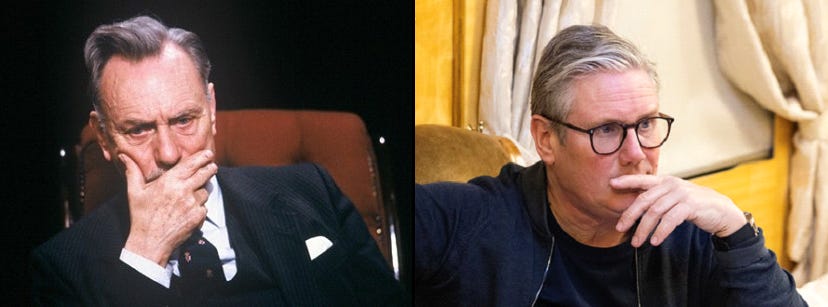
The observation that mass migration will lead to an “island of strangers”, is not new. In fact, it was famously referred to in Enoch Powell’s Rivers of Blood speech (1968). More recently, the idea that “different cultures are living separate lives, apart from each other and apart from the mainstream” has been highlighted by various mainstream figures, not least over a decade ago by David Cameron (2013), as well as by Angela Merkel (2010).
In the case of the Casey Audit, it was notable not just for the content, but because Starmer had to repeat Caseys’ findings, which his own House of Commons Leader, Lucy Powell, had downplayed and called a ‘dogwhistle’ just weeks prior.
In this “island of strangers” speech, Starmer had stated something that his party and much of the media had denied was the case, for the best part of the 21st Century. Yet in the aftermath of the speech, not a single member of the Labour frontbench nor any chief editor of a national newspaper sought to disagree with his Powellite language. Newsagents Podcaster and ex-BBC Journalist Lewis Goodall even admitted, “what the government has said today is concede that nearly everything Farage has argued for decades is correct”.
What this whole affair shows, is that although one might have expected the media and commentariat to protest, there is no independent thought - they simply fell in line behind this new government narrative. This is not a free-thinking Left-of-centre press, but client journalism batting for their government, regardless of what they think about right and wrong.
Six weeks later, in a soft-ball interview with the Observer, Starmer expressed his “regret” over his Island of Strangers speech. He downplayed the whole affair, “I wouldn’t have used those words if I had known they were, or even would be interpreted as an echo of Powell. I had no idea.”
“And, my speechwriters didn’t know either.”
Sure.
“Britain became a one-nation experiment in open borders. The damage this has done to our country is incalculable.” - Keir Starmer, Restoring Control over the Immigration System [Immigration White Paper], May 2025.
This foreword in Starmer’s Immigration White Paper, four paragraphs above his hand-written signature (on Page 3), is identical to any of Nigel Farage’s warnings a decade ago.
Now, is that Keir Starmer’s words or his speechwriters’? (Answers on a postcard please.)
7) Benefits, Brexit, and Cheap Labour - a warning shot to the next Government combatting “Nothing Ever Happens” in practice.
The many Parliamentary rebellions that Keir Starmer is facing on benefit reform—from Universal Credit to disability benefits—is not just a lesson in his electoral arithmetic, but a wider, deeper, systemic issue facing Britain. This has only become more pronounced in recent years.
Nothing ever happens.
Nothing even happens, or at least not in recent decades, because any policy change that results in a significant number of losers will simply be routed. Obviously, this is now a problem in British public life, because any government policy change naturally results in winners and losers. The 'nothing ever happens' phenomenon is a result of political constraints that prevent governments from ever making decisions that create losers, even when such decisions are necessary for long-term progress.
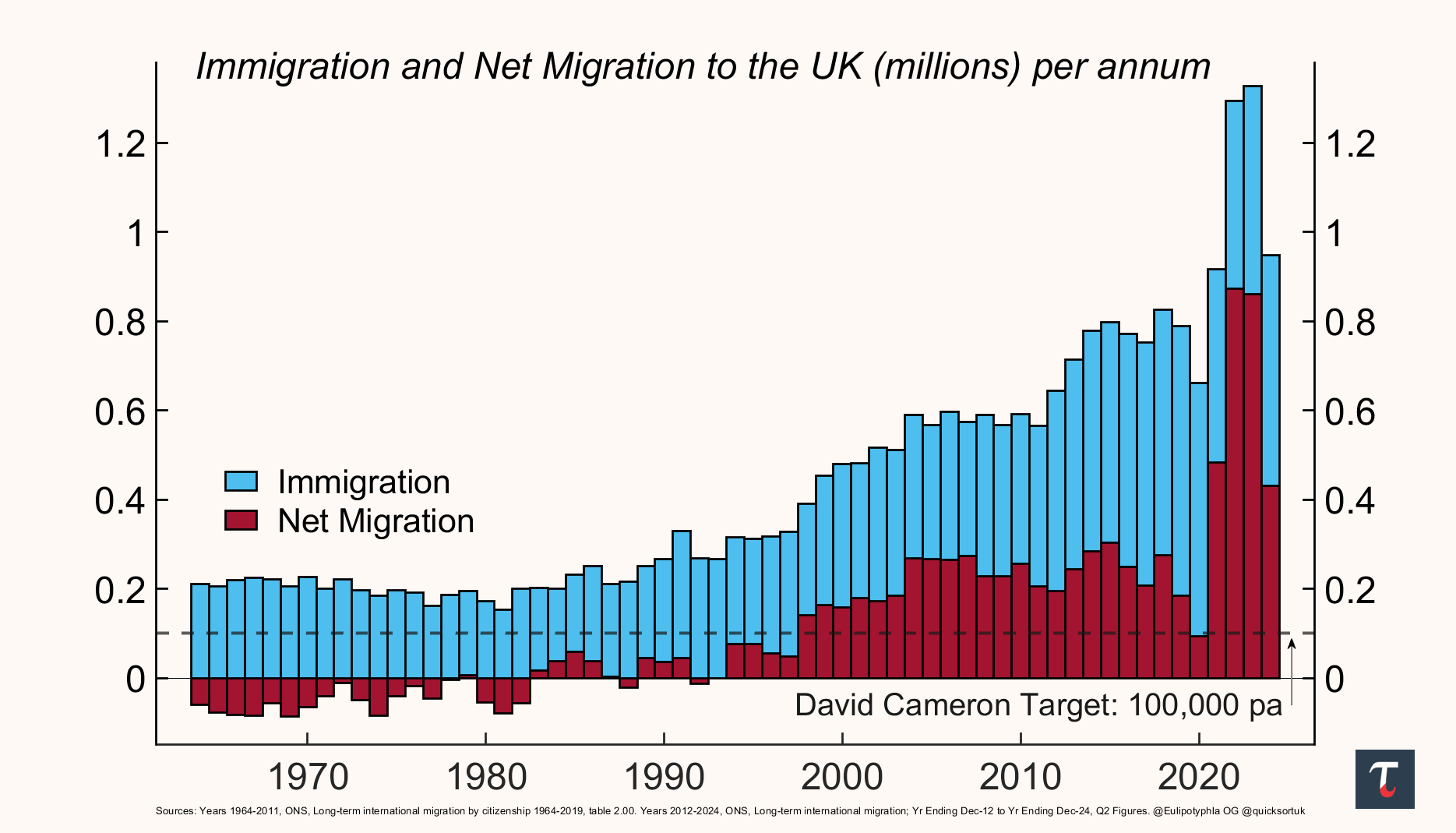
The "nothing ever happens" phenomenon goes beyond Starmer’s proposed welfare reforms, and in fact, poses a fundamental challenge to the delivery of Brexit.
Throughout the Brexit process, government decisions focused on: (1) securing a trade deal that largely replicated pre-Brexit conditions, (2) introducing subsidy programs that mirrored existing ones, (3) preserving most EU laws, and (4) implementing a new immigration system under Boris Johnson that, despite ending EU free movement, increased overall immigration by shifting the focus to countries like India, Nigeria, Pakistan, China, and Zimbabwe.
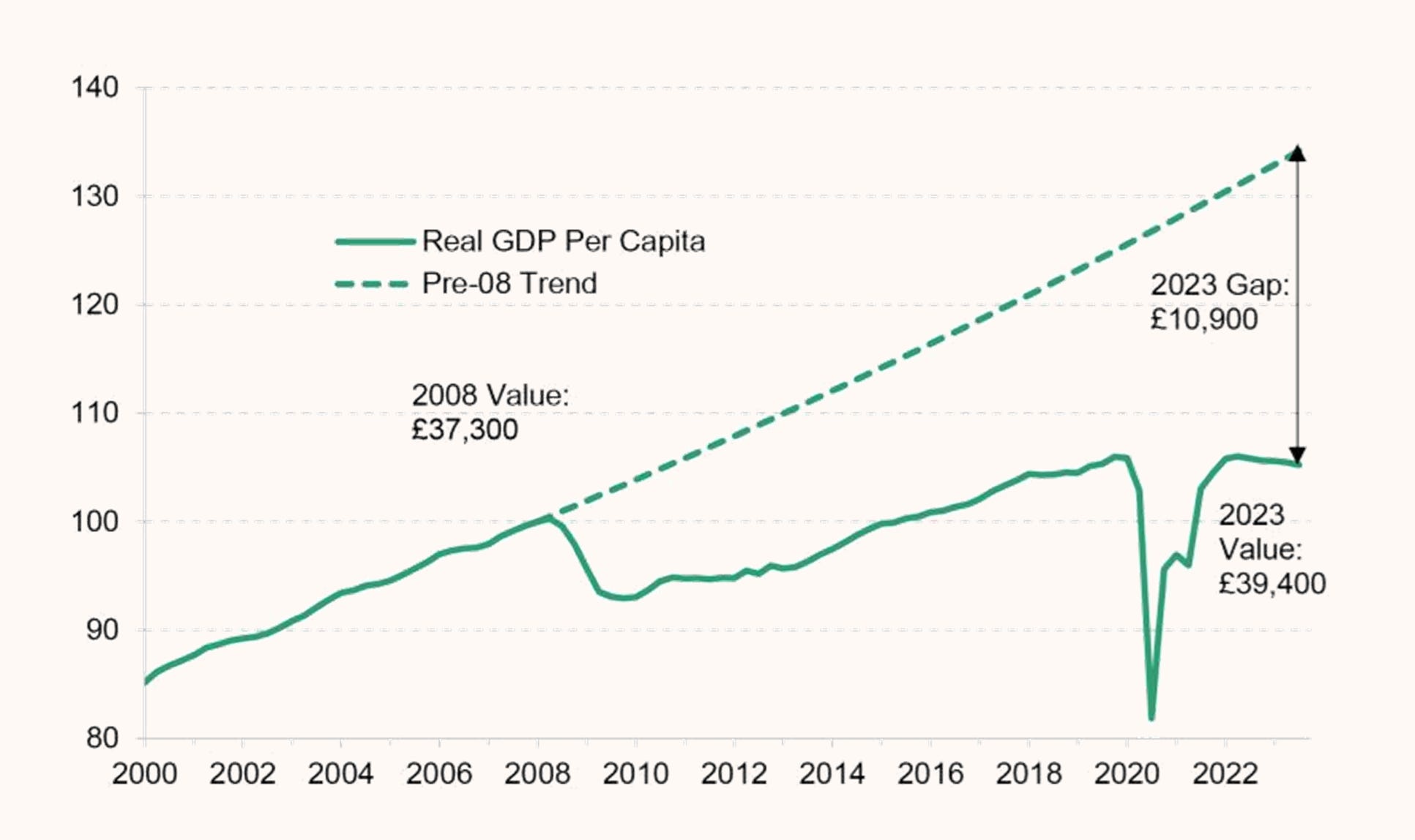
The ongoing economic crisis in Britain -of low wages, stagnant productivity, and flatlined economic growth- is fundamentally interlinked with the country’s reliance on low-waged mass migration.
It is possible to outline an end to mass migration, in conjunction with a number of measures addressed at both the supply and demand side of the labour market. A serious government could:
(1) raise salaries;
(2) cut out-of-work benefits;
(3) lift the burden on small businesses - from cutting employers NI, lower business rates, reducing corporation tax, to increasing the tax free dividend threshold;
(4) in limited cases, use time-limited migrant visas for seasonal sectors (i.e. agriculture) instead of the current points-based system;
(5) consider providing government incentives or subsidies to businesses, who employ more staff born in Britain.
Regardless of the exact modeling, planning, or actions taken by the next Government to end mass migration, we expect market disruptions in getting to that point. This will be unavoidable, even if the process is phased in and the public communication is very disciplined. And, it is likely that any significant re-wiring of modern Britain will face challenges beyond market jitters, as Gawain Towler outlines.
Very few governments will have the intellectual weight, logistical grip, and the political will to bite the bullet, because they fear the market’s ability to move disproportionately to minor government decisions, and nobody wants to be Liz Truss-ed by the gilt markets, or Black Wednesday-ed with the currency. Breaking this cycle is not just about political courage, the next government will need to make the preparations necessary to weather short-term market disruptions in pursuit of long-term economic and social benefits.
Without tackling this raft of challenges - from the economy, labour markets to immigration, neither Keir Starmer nor any future Prime Minster will be able to drive real growth and security in Britain.
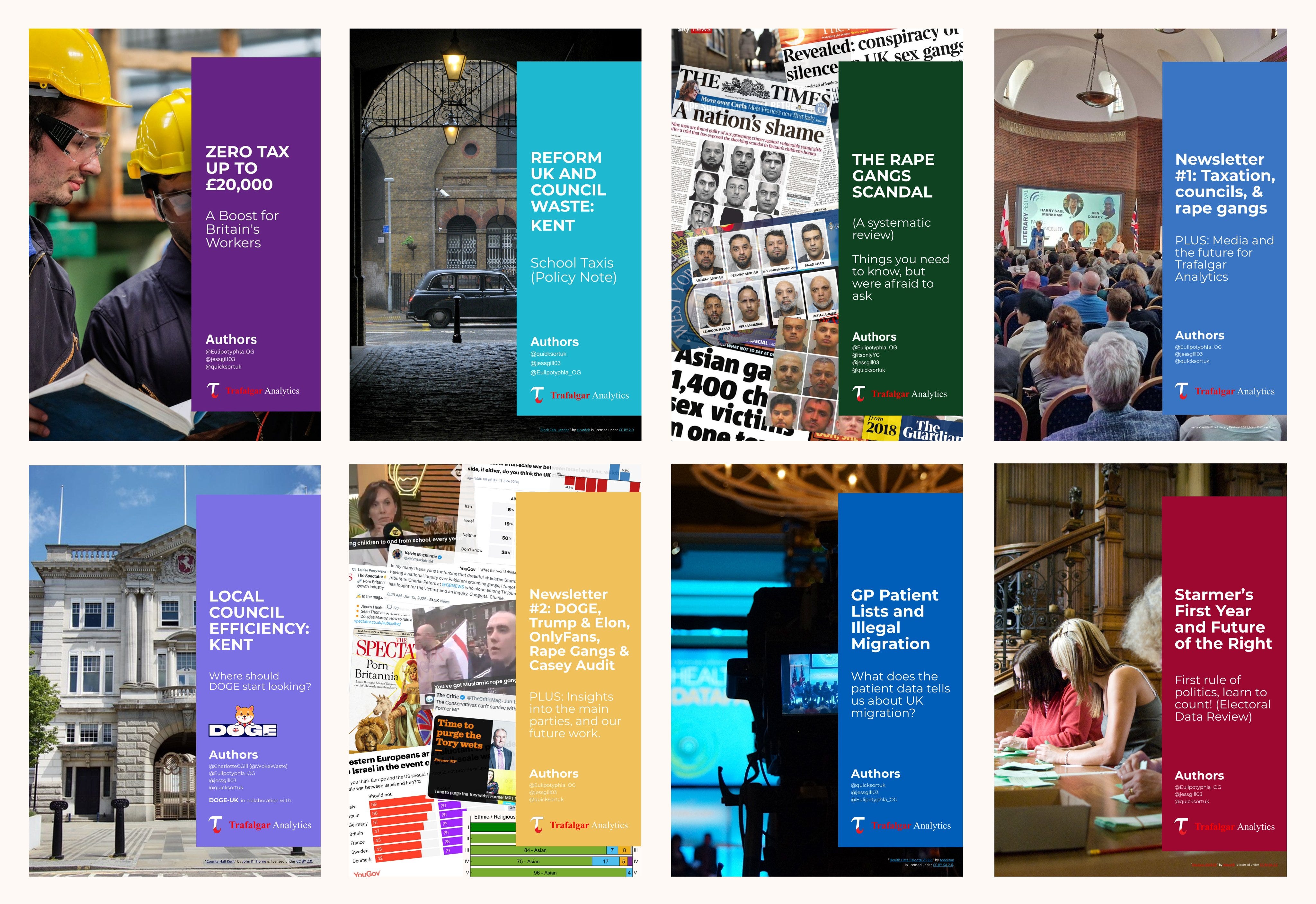
Supplementary: Our work to date (Free), Tory Parliamentary Selection Info (Exclusive), and future work from Trafalgar (Paid)
So far, we hope you have enjoyed our reports, insights, and podcast content.
If you have not seen our first Trafalgar in Conversation podcast episode with Rupert Lowe, feel free to watch it: here.
We discuss our research from the healthcare system, the rape gangs scandal, to illegal and legal migration.
Exclusive: Tory Parliamentary Selections begin!
With several years before the next General Election, the Conservative Party are looking for parliamentary candidates again, with applications closing on 30th June 2026 - almost a year’s time. Here are the inside details: